News from the movement
Learning Movement at TEDx Brussels
Diana · · 6 min read
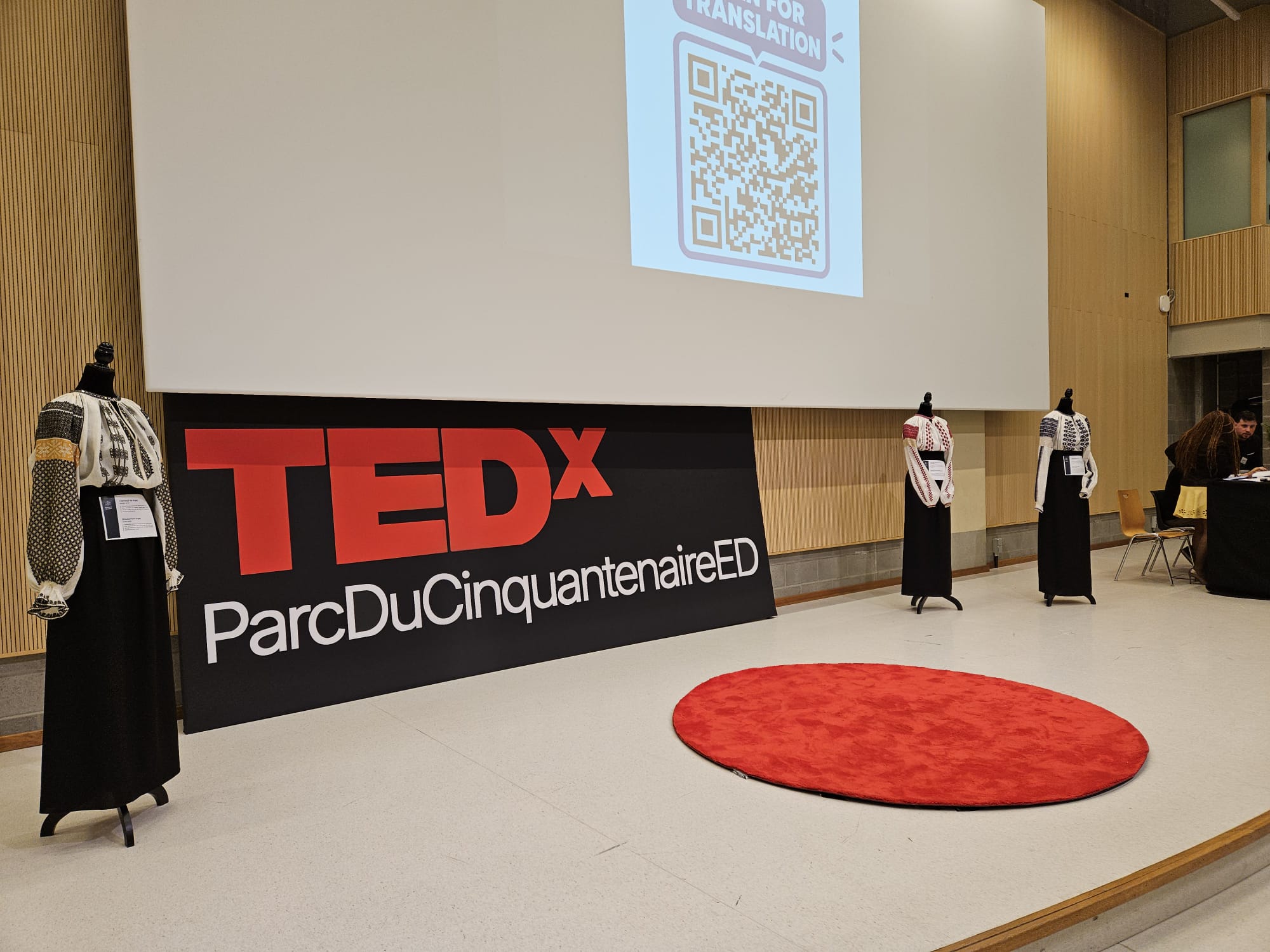
Just a few weeks after our website Learning Movement was launched, there was a TEDx event organised in Brussels on the theme “Legacy and Creativity”, which covered topics such as education, AI and heritage. It seemed like the perfect opportunity to attend and check where the focus lies in like-minded people. My assumption is that so many of us – millions – see the same: there are structural issues with the education system as we know it, the AI is a reality we cannot ignore and many areas of becoming an adult are not covered in school.
The event was the first TEDx organised in Romanian in a location outside Romania. The attendance was impressive: more than 850 coming from Belgium and other European countries, present in the auditorium of a renowned university in Brussels, with tens of thousands who followed online. Through the 16 speakers, we listened to various angles of the event theme: an ambassador, a Member of the European Parliament, an astronaut, an ex-judge who decided to invest his energy in the civic education, a mother who developed an emotional intelligence program, a popular author and blogger, an entrepreneur and a sports coach teaching resilience.
The event was very fulfilling for me. Some of the key ideas I was left with are the following:
Our mission is to find solutions for the people and do well for people. Our focus should not be to reach our ultimate potential individually, but to accompany each other and better each other’s lives. (MEP Nicolae Stefanuta)
AI challenges our ideas about learning, expertise and creativity. The question is not what AI can do, but what we choose to do with it. This requires dialogues between teachers, researchers, artists, professionals and citizens. (Vice Dean Sonja Jenssens)
How can I, as a teen, get ready for the future and not be afraid of it? Andreea Banica, founder of the program passport for the future, put forward the importance of discovering who we are, beyond what we do. Discovering that voice which makes each of us unique and developing our abilities and values is very important in order to prepare for the future. The point is not to be given a map, but be helped to build our own compass. The question is no longer what you know to do (competencies), but who you are and what you choose to do with what you know. The goal is to cross the border between childhood and adulthood in terms of maturity and hear their own voice so strongly that they can realise by themselves what they want to become.
Cristi Danilet spoke about how we form our discernment, over time, through education and the values that others have passed on to us. This depends on our heritage and the AI cannot replace this education. Heritage does not mean what we pass on, but what we choose to transmit to others.
Continuing on the heritage angle, cosmonaut Cristian Presura reiterated that the values are not taught through books, but they are lived day by day, through the power of example. There is no curriculum that can replace that. This is live transmission, from human to human and the family is the first school of philosophy in practice. The systems in which we live model our choices, just as our choices model the systems we live in. The systemic change does not precede the human change, it follows from it. All it takes is the collective will to do differently.
The threat we witness with the AI revolution is the threat to the cognitive intelligence. While AI can beat the human in terms of data processing, AI cannot replace our wisdom, the capacity to find answers, as well as the moral weight from implementing decisions. That is the human advantage and it will never be lost. The AI is a tool that we decide how we use and the human inner compass, which is based on values, is what should define how we use it. (The Human Advantage – David Timis)
Radu Magdin spoke about leadership, soul and spirit. Leadership is built on being human and on the meaning one assigns to what they do. One cannot move an entire society unless one gives it a direction and a meaning. The current protests happening in France are just a sign that the people are looking for a new social contract, a new deal. His advice was to use technology to gain time, but to not allow it to destroy what we have from the old social contract before we have a new one on the table.
Levente Kader highlighted that maturity gets formed with time and we cannot control how long it takes to become. Resilience teaches that it is not what you feel that keeps you building, but staying long enough to discover who you are. It is about what you do when it is tough, it lasts long and nobody sees how hard it is, but you go on.
Education does not start with a building. It starts with someone who has the courage to believe that things can be done differently. (Liviu Hopartean)
Maybe the intervention which touched me the most, through the similarity in understanding the process of our becoming adults, was Ioana Chicet-Macoveiciuc, from printesaurbana.ro. She wrote tens of books for children and adults and is a very popular blogger. Her intervention was focused on the process to internalise the meaning we each give about the world we live in and how AI impacts that. While the AI could help us be faster with homework and get us higher marks in tests, studies have shown that long-term, the end-year results are lower. And this is because what matters is the creative process through which each of us gets from “I don’t know/don’t understand” to “aha, now I get it” and all the emotions which come with it. That internalisation process and journey has to be lived in relations. The answer given by AI will be forgotten because we have no relation with that information. The process of understanding is reduced when AI is used. It is like an empty case if the process is not lived in order to understand the world around us and make meaning of it.
What stayed with me after that Saturday afternoon is that education is about becoming and who we become depends on the values we choose to uphold, the discernment and resilience we built through time and the process of internalising what happens within us and around us. To me, this is key, because I believe that without putting all this into practice in schools and beyond, education is bound to fail. And fail means we remain unskilled children in adult bodies, without the tools to live a fulfilling life, where our unique voice and talents can shine.
The TEDx event can be very inspiring. An opportunity to meet like-minded people. But it remains a snapshot in time. As Mantvydas, my Learning Movement partner and co-founder, says – change happens in what we do every day and the discussions currently happen on the streets, not in fancy events. I believe both have value but in order for these nice inspiring snippets to come to life, we need to discuss how we can implement them in schools and beyond. So come join our community, where these discussions take place every day: how can we respond to the structural issues of today’s education system, how can we support parents in managing and succeeding at the first school – the family – and how can we support individuals to get the tools to become capable, potent adults who can move society towards better horizons. Change comes through the collective will and channelled common effort, so join our Whatsapp community!
You may find us next at the “Architects of Education” in Lithuania, on 28 October.
Share this
Add a comment