News from the movement
France’s students are protesting. But the problem goes much deeper
Learning Movement · · 4 min read
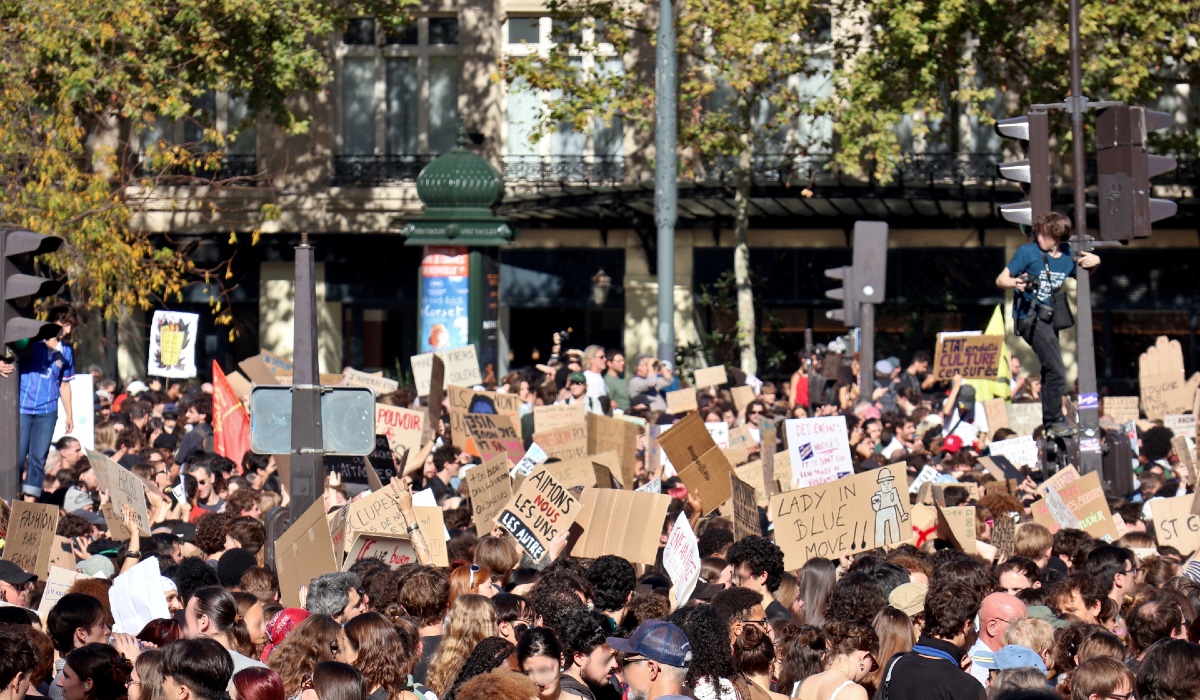
What began with students protesting teacher shortages and deteriorating conditions in schools has grown into a nationwide movement. Schools have been blockaded, classes boycotted and tens of thousands of students have taken to the streets. Teachers and parents have joined them. On October 6 alone, more than 250,000 people demonstrated across France, according to official estimates.
Their demands are understandable: more teachers, better-funded schools, functioning facilities, fairer opportunities and an education system capable of actually serving its students.
The pressure is already producing results. The French government has promised thousands of additional qualified teachers.
That matters.
But we also need to recognise that these demands address the symptoms more than the underlying problems.
Better staffing, funding and facilities can improve education significantly. Yet they do not resolve broader questions around how people learn, how ability is recognised, how much freedom individuals have over their education, or how strongly credentials determine access to future opportunities.
If the deeper problems remain untouched, improving a few visible parts of the system may simply postpone the next crisis. New frustrations will appear, new failures will surface, and sooner or later people will be back in the streets again.
The immediate problems deserve immediate solutions. But the frustration now visible in France should also push us to think beyond them.
The protests can be the start of something bigger.
And we believe that a community bringing people together is the foundation for creating that.
The Learning Movement does not claim that the students protesting in France already share our ideas, but we do believe that many pupils and students share the frustrations of the French people and that they will recognise themselves in the ideas of our Manifesto.
They do not represent one ideology or one solution. Some simply want their schools to function properly. Some want teachers who are actually there, classrooms where they can learn and an environment that allows them to focus on education. Others are protesting inequality, access to higher education or government policy.
But when hundreds of thousands of people are willing to leave classrooms and take to the streets over education, that should be taken seriously.
It creates an opening for a broader conversation about what the end goal of education actually is and what education needs to look like in the future.
That includes individual-centred learning, alternative learning paths, better ways of demonstrating competence, the role of technology, and giving people much more freedom over how they learn and develop.
And there is a more basic principle underneath all of this.
If the existing education system has disappointed people to the point where they are willing to leave classrooms and protest in the streets, then these people should also be given the viable option to leave that system in a more meaningful sense.
They should have the right to choose another path.
To learn differently.
To build alternatives and benefit from them.
To prove what they can do without being forced through one predetermined route.
And, where those alternatives do not yet exist, they should have the freedom and opportunity to create them.
That is not the complete answer to the problems we are seeing.
But it is a place to start.
Connecting experiences that are usually separated.
Problems around education are often discussed in isolation.
Teacher shortages are treated as staffing issues. Student distress becomes a mental-health discussion. Degree requirements become an employment issue. University admissions become a question of access.
The Learning Movement can help connect those conversations.
Not by claiming that every problem has the same cause, but by creating a place where students, teachers, parents, researchers, employers and others can compare experiences, challenge assumptions and develop better alternatives together.
That is where a movement can add something different.
Not another institution deciding what education should look like, but a community of people exploring and building what else might be possible.
If you are asking for change, join us.
If you are protesting, frustrated with education, or simply believe learning can and should work better, we want to hear from you.
Share your experience. Tell us what should change. Bring your ideas, even if you do not yet know the solution.
What is happening in France is unlikely to be the last time we see this kind of frustration. When problems exist at the level of the education system itself, they do not disappear because one protest ends or one demand is answered. They return in different forms, in different places, until something deeper changes — until a new social contract emerges and we decide what kind of society we collectively want to create.
The protests expose the symptoms. Now we need to build what comes next.
If you believe learning can be better, join The Learning Movement here.
Share this
Add a comment